


Jerusalem in Lesotho

Updated: May 1
Or alternate title: The city of Holy Peace in Lesotho. This is potentially a very important article. And we think that if one starts to ask a simple question, is Jerusalem in Lesotho? Many other things will follow. So, is it possible? Yes it is very possible. A little bit of suggestible mapping being done in this one. We will take the risk and get the theory out there. Because as several locations do fit very well when combining them. They line up nicely. Especially all the Gates you needed to enter through the various mountain passes found going from South Africa and going into Lesotho. Sani pass, Qachas nek, Ongeluksnek, off course the Maseru crossing and Sterkspruit mountain passes in the south of Lesotho - are of particular interest as far as the 10 major Gates going into the ancient city. It is early days, and wether or not correct, we will bring this information to life. We know right from the outset that Lesotho is filled with Levites and peoples that have intermarried with the tribe of Levi (though severely mixed are also the traditions and customs by now). Keeping locations and culture in mind, the central theme is Lesotho & Jerusalem. And all of this suggestible or possible mapping becomes more real if you ask the question - is the old city and area of Maseru a piece of ancient Jerusalem? Could be.
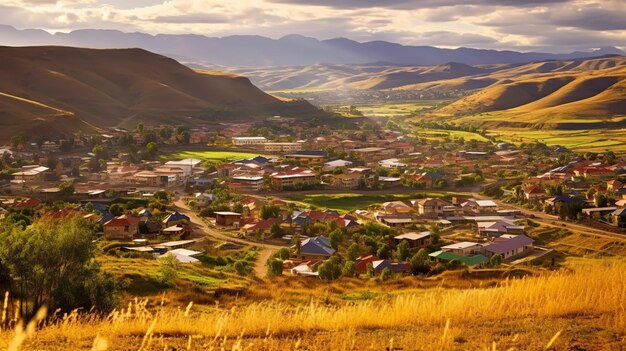
As you enter Maseru, and you leave the chaotic spirits that reign and rule in the minds of the people of South Africa, you enter a different realm when going into the official land of the Basotho. The Kingdom in the Sky. This crossing I have done several times, and I get the same feeling every time. A reverence. Could be just the altitude and the mountains (and the Sothos), however there is more to it. You get a feeling of something that was said to be the brand (if you will) of ancient Jerusalem. Peace. A city of Holy Peace, to be more precise. And Lesotho as a country is full of that, peace. And it is inhabited by peaceful people. Strong willed and decisive, steeped in culture, blankets and a good dose of ancestral - Malusis/Shepherds on every mountain top. Some even praying/declaring for the people there at nightfall and some every morning. Declaring the day and the night. As a good witness should be doing. A people, if they want to admit it or not, just like the AmaZulu, are steeped and riddled in Egyptian mythology - deeply embedded in their culture, both in the north and south. By no means equally divided among all the various tribes, but the Egyptian culture is there. They even have stories saying they came from the reeds. A big topic, and we will get back to that one. Ancient Egyptian beliefs and customs among aBantu. Could easily be a book, maybe it will. But not by us. Let us get into this !
Family, if we can agree somewhat on the fact that Jerusalem must have been a vast city, as described according to the Prophets like Nehemia (Nememiah on Jerusalem) - if we can agree on the city being large and the locations within close proximity of one another - if we can agree on that many other locations will follow. And we have seen all of the rather recent, current and older theories out there: Jerusalem in Namibia, Jerusalem in Botswana, Jerusalem in Zambia, Jerusalem in Uganda, Jerusalem in Ethiopia, Jerusalem located in the whole area of all of southern Africa with its walls bordering Solomons wall in Botswana, on the other side of the Zambezi, Jerusalem in Kenya, Jerusalem in Sudan, Jerusalem in Ghana, Jerusalem in West Africa in general - hey even Mount Zion is suggested as being in Kenya. Listen, we have seen them all, and they do not make sense when put under the light of the fire and reasonable questioning. So therefore let us reason. Let us put together what we know. As we can all agree that Christ moved freely and without problem between these Biblical places - they must have been within walking distance of one another. Surely people will understand that. With wild animals and bandits (many tribes) waiting around every bend, travel was not easy. Nor was it done by car - maybe by horse or camel, but most of the time people went by foot. That is the logical approach here. Walking distance and dangers lurking. Will limit the reasoning behind many of the bombastic theories out there.
Now then - If we can find MANY Biblical locations in and around Lesotho, we have to go deeper into these areas. Leave the Namibian and the other side of the Euphrates (Zambezi) theories of Jerusalem. Let them be for now. Because if Mount Moriah (Morija), Cana, Nazareth, Mount Ararat and Lubar, Gethsemane (the gardens) is not far from Thaba Bosiu, Ts`hlanyane being a possible place of the Skull (Golagolatha) and not to mention Ha Lehata (place of skull) in southern Lesotho - the mountain were He was taken to suffer, The River Jordan and Bethlehem (a long with MANY other locations) - are indeed within or around the borders of Lesotho. We are only in fact "missing" the Biblical Lakes, Galilee or Lake Tiberias being the most important one. If we accept that some of the waters might be dried up or Galilee was in fact a part of the ocean (not likely, but still if we work around) - then most other locations align. Let us use that knowledge as for now confirmed locations, and as our base and starting point.
In moving on, and as usual we find that the clues are hidden in language, for were does the name Jerusalem come from? Is it the name aBantu used? Ngunis, Sothos, Pedis, Tswanas, Tsongas, Vendas, and all the other nearby tribes, let us gather around the campfire. Get yourself warm and lets get into this together ! The truth will come in the language. We dive.
Now you see, if we go in to the origins of the word Jerusalem, the etymological realm of African words as we know them today, Jerusalem is an Arabic word in its pronunciation. This is the historical spawn of the latter Babylonian and Phoenician translations of our Scriptures. To understand this you have to go into the extra curricular activities of older collections of books such as Babylonian Talmud and the Mishna. Questionable books from questionable times periods. Still they are important. These may serve in time as the birthplace of a lot of confusion as they have the latest Hebrew Script - derived from the ACHAMEANID (Persian) Empire which again is derived from the Phoenician Alphabet. This is why Swahili - the language spoken where the Phoenicians had their base in countries like Tanzania and upwards, is littered with original Hebraic and Bantu words. So to get to the modern Arabic phonetic pronunciations it went something like ancient Hebrew, Phoenician, Persian and then Arabic (shortened version). That is how the language, the mother tongue of the Hebrews left Africa. We have a large article prepared on the Phoenician and Swahili connection. This could have been a book, but there is no time to finish it to complete satisfactory levels, so it will become another article.
Anyways back on track, this original Hebrew and Phoenician inspired script (would have looked like Paleo Hebrew), later on in time morphed into an Arabic sounding language and the later on into the modern Hebrew language, although words are very similar, it does little to show its relation to African Bantu languages. Idioms and figures of speech only to be understood in a cultural context, is now lost. Especially it changes its form phonetically. The words themselves however, are many and the same, as we have shown examples in articles like Bantu Words. The traces are there, and the same traces are found in another carrier language the ancient trading language of Swahili and Phoenician. They may even be closely related.
Now then - if we go to the Hebrew Bible - the word or name for the city was Peace, a city of Peace, which was Salem (יְרוּשָׁלַיִם). The Greek name Ierousalēm (Ἰερουσαλήμ) and in Roman Latin Hierosolyma, at least here you get some of the deeper Hebrew meaning, a place of Holy Peace. Or the Place of His Peace. And now we are getting somewhere. We will get into it further below. The Romans also called the place Aelia, and even sought to change the name of Salem to Aelia. And if you start looking into the Etymology of the name, you will quickly see that it has MANY different names that is used in our Bible. Or should we say Hebrew Scriptures. Or what we should call it, soon to be Bantu Scriptures or Bantu Bible. This Bible will be completed one day, by us all. We may need 70 of us, one representatives from each tribe, and some 50 others, to be able to finish it. Massive project. SoNiNi makubenjalo.
But lets stay on track - to get into this one we have to look at the historical names for the city we know as Jerusalem today. And there are many. Yerushalayim (ירושלם) which is as Arabic as it gets. This name is only traceable in the so-called Middle ages. The Greek version is Hieros meaning Holy, and from there we get the Holy Peace. Hieros Salem. Pronounce it like a Portuguese from Mozambique would pronounce it, HIEROSH SALEM. That was the Greek way of saying it. Still, it just sounds to latinised. It does not ring right. The Romans even went some ways to try to change the name of Jerusalem to Aelia. Which we will get into further below. In the Middle Egyptian Kingdom we can find Urusalim (Ꜣwšꜣmm), which is historically identified as Jerusalem, though this is a very slim historical reference. It may be talking about another place entirely, a word that means something like Exalted Head when directly translated. These are from the Armarna Letters from ancient Egypt (the southern parts of Egypt) - reportedly from a thousand years before Christ walked the earth, so they have to be considered as the genuine article. Are they talking about ancient Jerusalem though? Not sure. Still, most old documents like these should be regarded as sound and genuine unless they contradict Scripture. These letters are a whole topic in their own right, but if read with an open mind you can easily expand the borders of Egypt into Central and Southern Africa. They had interactions with Byblos, a Phoenician city in South-East Africa, so they must have been much further south. And as the Paturisi theory proves, indeed these ancient civilisations did occupy larger parts of Africa. But lets get back to ancient Jerusalem for now.
The Biblical Greek (Ἰερουσαλήμ) is the adoption of the name we are using today. Hieros Salim - Hierosolyma (Ἱεροσόλυμα). Now the ending in Hebrew, Ayim is from these later interpretations of Scripture. If we go to our Scriptures the word for Salem is used parallel to Zion, which is the supposed citadel of Jerusalem. Josephus attests to this as being so in his historical books.
Language | Name | Translation |
Greek (LXX version) | Σαλήμ | Salēm |
Koine Greek variation | Σόλυμα | Solyma |
Latin | Salem | |
Arabic | سَـالِـم | Sālim |
Hebrew | שָׁלֵם | Šālēm |
Phoenician | 𐤔𐤋𐤌. | šalōm |
Swahili | Amani | Peace |
Venda | Mulalo | |
Zulu | Thula | |
Sotho | Khotso | |
Sepedi | Khutšo | |
Tswana | Kagiso |
Now, the connection is in the language. We have said that many times before, and stand by it. But the gap becomes apparent when placing the Bantu words in a table like this. The connection is there, but from Swahili, it has gone its own way. So let us stick to what we can decipher. The fact remains that the Kanaanite god of the dawn and dusk (sunrise and sunset), was spelled Shalim. Which leaves the imagination wondering again. Are we looking for a place that was even called Jerusalem on the continent of Africa?

If we connect Mount Zion into this (הר צִיּוֹן - Har Tsiyyon) is the name where the Jebusite fortress stood, and the same name is also applied to the Temple Mount which was north of the fortress, know as Mount Moriah, also called Daughter of Zion in the Scriptures. If we plot in these two into Mapcarta, we get a walking distance of about 4-5 days. This does also make sense, the names are there, the lore is there, the people are there saying these same things. We will have to dig in more, but it may just be the location of the skull and Zion inside Lesotho.
Now if we map Mount Moriah, according to the old myths based in Lesotho, which was said to be a part of the Temple Mount, and inhabited by the Jebusites (Judges 19,10). And this piece of land was sold to King David by a Jebusite called Ornan, for 600 shekels of gold (1 Chronicle 21,26). And it was at this mountain top that it was built a threshing floor (an altar sacrifice) to stop the plague SoNiNi had sent upon ancient Israel - and in the same spot is where Solomon built his Temple. The Jebusite stronghold was called Zion, taken by force by David, later to become the City of David. This location will also be inside Lesotho (2. Samuel 5,7-10). Now if we find residues of an old Iron walled fortress close to Morija, then the Temple Mount is close.
SoNiNi sees
Now another etymological trace is in the Adonai-Jireh, from the Latin Dominus Videt. Which means something like SoNiNis Peace. YirehSalim. This is the purest origin of Jerusalem. But we have other names for the city, like:
Oasis of Justice (נווה צדק) - Neveh Tzedek (Naweh Zedek) - Jeremiah 31,23
Ariel (אֲרִיאֵל) - The name given by Isaiah when SoNiNi brings distress upon Ariel and He will make her like an ARIEL(a fire or an altar)
City of Holy Peace (עיר הקודש) - Ira-ha-Kodesh (Arabic) - Isaiah 48,42 ; 51,1, Daniel 9,24, Nehemiah 11,1 ; 11,18
The City of the Great King (קרית מלך רב) - Kirijata melek ra - or In Greek is Polis Megalou basileos (πόλις μεγάλου βασιλέως) as found in Matthew 5,35
Now these lands of the now Basotho got decimated by the Romans, and after the name changed to Aelia Capitolina the Second Temple was destroyed. There would have been such times of trouble that we cannot even imagine. It seems Greeks and many other nations remained in the area. Hence the Griqua culture still being not far from BaSotho. But thats another topic.
Now the Temple of Jupiter was built over the Temple of Solomon. The form Aelia Capitolina (in Tiberian Hebrew - אֵילִיָּה קַפִּיטוֹלִינָה) pronounced Eliyyah Qappitolinah (Êliyyāh Qappîṭôlînāh) is the latinised (Romanised) and later Arabic form of saying Jerusalem. This Romanising of the ancient city of Jerusalem resulted in various conclaves of Roman legionaries, war veterans and other non-Hebrew settlers. Jerusalem was indeed trodden down by the Gentiles like Scripture says it would be. So much so that its former history is all but lost.
If you think this is not so listen to this quote from Eusebius of Caesarea, saying that Jerusalem ... (Maier & Church History, 2007):
"...had been emptied of the Jewish nation and had suffered the total destruction of its ancient inhabitants, it was colonised by a different race, and the Roman city which subsequently arose changed its name and was called Aelia"
Comments